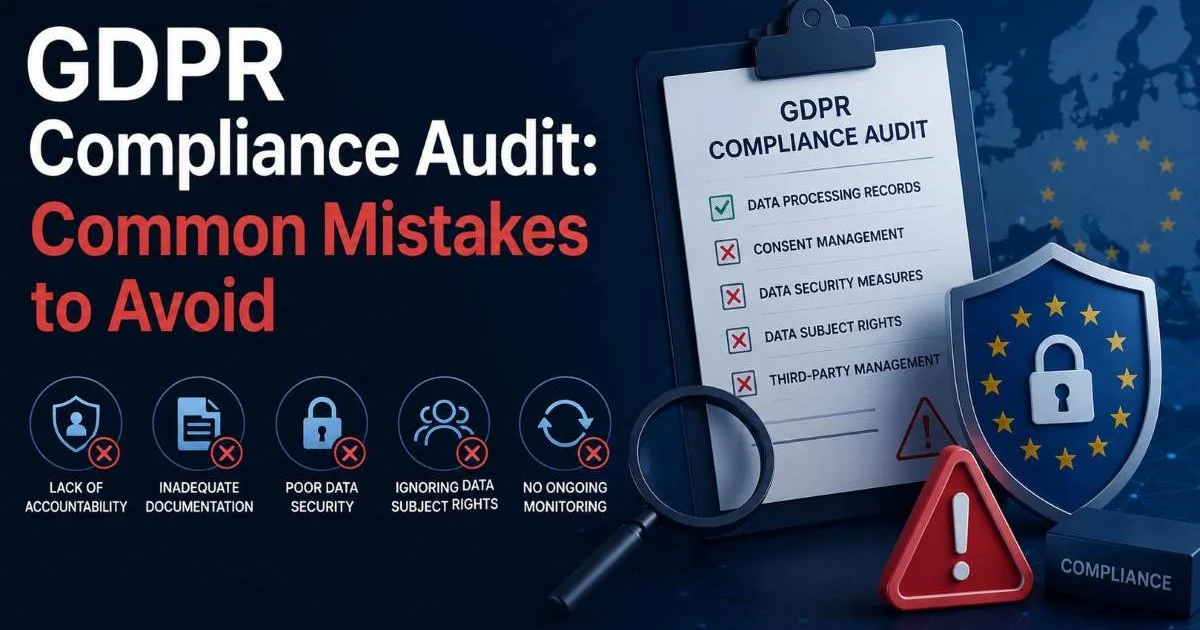
A GDPR compliance audit is one of the most important exercises any organization handling EU personal data can undertake, yet it's also one of the most frequently botched. When teams approach a GDPR compliance audit, common mistakes to avoid range from incomplete data mapping to ignoring processor agreements, and many of these errors carry six- or seven-figure fines.
The stakes are real: supervisory authorities issued over €2.9 billion in GDPR fines in 2023 alone. For data privacy and compliance professionals, understanding where audits go wrong is not optional. It's the difference between a defensible compliance posture and a regulatory catastrophe. This guide walks through the four most damaging categories of mistakes and provides specific, actionable steps to sidestep each one. If you're planning or refining your audit process, consider this your field manual.
Key Takeaways
- Incomplete records of processing activities are the single most common audit failure point.
- Treating vendor contracts as formalities creates hidden compliance gaps that regulators actively target.
- Technical and organizational measures require documented evidence, not just verbal assurances from IT.
- Data subject rights workflows must be tested regularly, not assumed to work correctly.
- A GDPR audit should be continuous and iterative, not a once-a-year checkbox exercise.

1. Incomplete Data Mapping and Records of Processing
Why ROPA Gaps Are So Dangerous
Article 30 of the GDPR requires organizations to maintain Records of Processing Activities (ROPA), and regulators treat this document as the foundation of any audit. Yet an alarming number of companies either lack a ROPA entirely or maintain one that's outdated by months or years. When a supervisory authority requests your records, an incomplete ROPA signals broader systemic problems. It tells the regulator that you likely don't understand what data you hold, where it flows, or who accesses it.
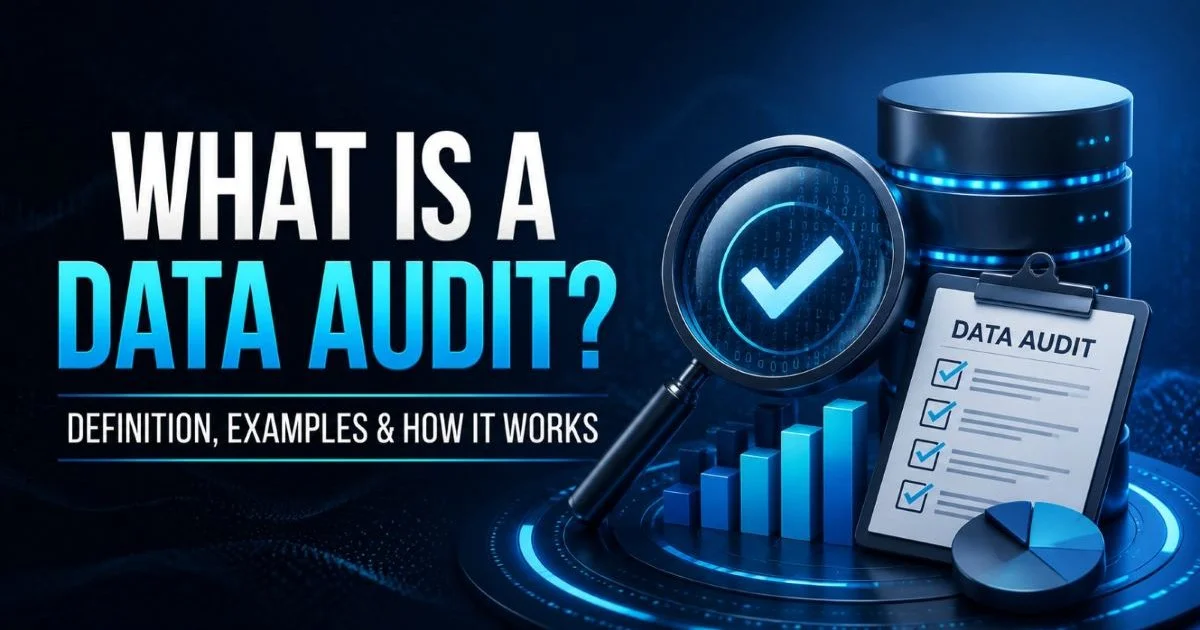
The root cause is usually organizational fragmentation. Marketing collects email addresses through forms, HR stores employee health records, product teams run analytics pipelines, and nobody owns the central inventory. Understanding what a data audit is and how it works gives teams a structured starting point for addressing exactly this kind of sprawl. Without a single source of truth, your ROPA becomes a patchwork of assumptions rather than a reliable compliance artifact.
How to Fix Your Data Mapping Process
Start by assigning data stewards in every department. These individuals should be accountable for cataloging the personal data their team collects, processes, and shares. Give them a standardized template that captures data categories, legal bases, retention periods, and third-party recipients. Review and reconcile inputs quarterly at minimum. Automated discovery tools can accelerate this process by scanning databases, file systems, and cloud storage for personal data patterns.
Schedule quarterly "data mapping sprints" where each department validates its ROPA entries against actual systems and workflows.
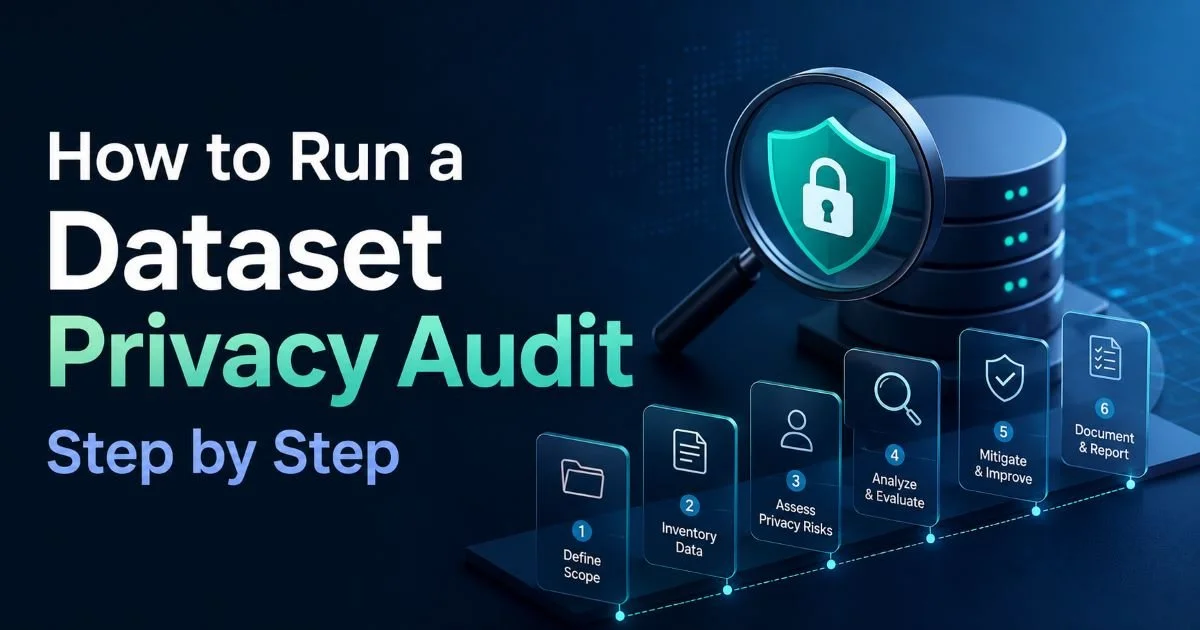
Once you have comprehensive records, cross-reference them against your privacy notices and consent mechanisms. Any processing activity in your ROPA that isn't reflected in your external privacy documentation creates a transparency violation under Articles 13 and 14. For a detailed walkthrough of this process, the guide on how to run a dataset privacy audit step by step provides a practical framework that maps well to ROPA maintenance.
2. Overlooking Data Processor Agreements
Common Contract Gaps
Article 28 mandates specific contractual clauses between controllers and processors, yet this is an area where GDPR compliance audit mistakes are disturbingly common. Many organizations sign vendor contracts that lack explicit data processing addendums (DPAs) or contain boilerplate language that doesn't meet GDPR's granular requirements. A valid DPA must specify the subject matter, duration, nature and purpose of processing, types of personal data, and categories of data subjects. Vague language like "vendor will handle data appropriately" falls far short.
The risk extends to sub-processors. When your SaaS provider outsources infrastructure to a fourth party, your original DPA needs to address that chain. Regulators have fined organizations for failing to monitor sub-processor arrangements, particularly where personal data leaves the European Economic Area. The 2023 Meta Ireland fine of €1.2 billion centered partly on inadequate transfer mechanisms within processor chains.
Relying solely on a vendor's posted DPA template without reviewing it against your specific processing activities is a compliance gap, not a shortcut.
Auditing Processor Relationships Properly
Build a processor register that lists every third party handling personal data on your behalf. For each entry, document the DPA status, last review date, sub-processor disclosures, and international transfer mechanisms (Standard Contractual Clauses, adequacy decisions, or binding corporate rules). If you're working from a data compliance checklist for small businesses, processor management should appear as a recurring review item, not a one-time setup task.
Exercise your audit rights under Article 28(3)(h). This clause gives controllers the right to conduct inspections of processor facilities and practices. Most organizations never invoke this right. Doing so, even selectively with your highest-risk processors, sends a signal that you take compliance seriously and often surfaces issues that self-reported questionnaires miss entirely.
3. Failing to Document Technical and Organizational Measures
What Regulators Actually Expect
Article 32 requires "appropriate technical and organisational measures" to protect personal data, but "appropriate" is context-dependent. Regulators don't expect every company to deploy the same controls. They do expect you to demonstrate a risk-based approach with written justification for the measures you've chosen. During a GDPR compliance audit, common mistakes to avoid include relying on verbal assurances from IT teams or pointing to generic security certifications without mapping them to specific processing activities.
Encryption, pseudonymization, access controls, and regular testing are explicitly mentioned in Article 32. But documentation is what proves compliance. A firewall is useless from a compliance perspective if there's no record of its configuration, no log of access reviews, and no evidence of penetration testing. Monitoring tools, including AI agent monitoring solutions, can help teams maintain continuous visibility into how data processing systems behave in production, catching anomalies before they become breaches.
Building an Evidence Trail
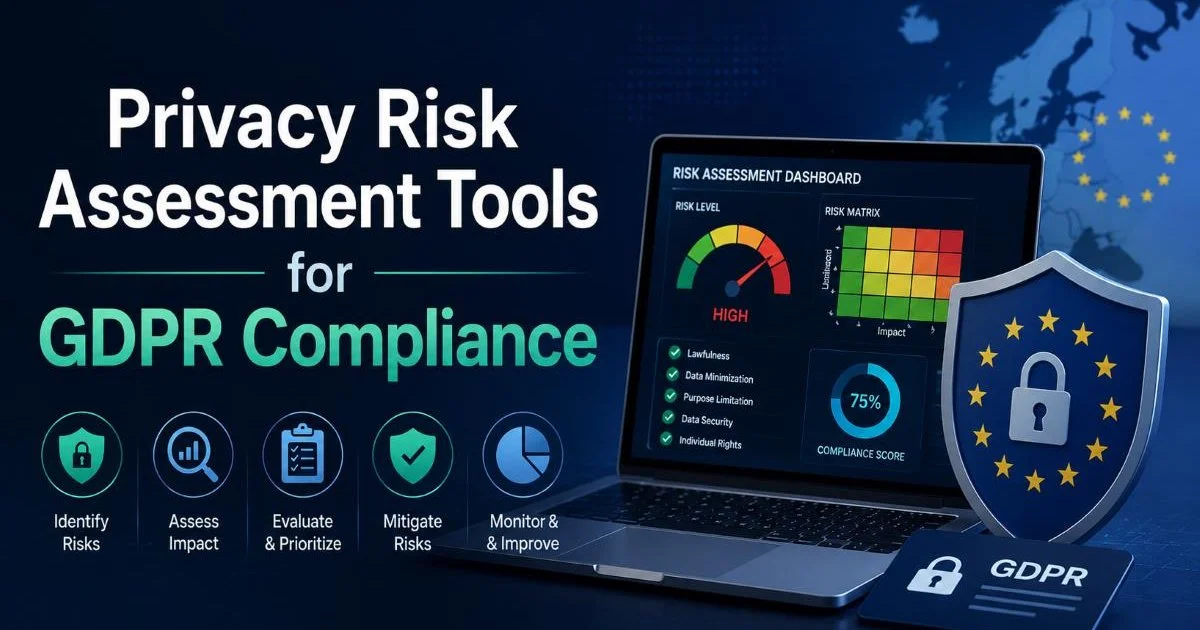
Create a Technical and Organizational Measures (TOM) register that links each processing activity to its specific security controls. For example, your CRM processing should reference encryption at rest (AES-256), role-based access control configurations, and the date of the last access review. Use privacy risk assessment tools for GDPR compliance to identify which processing activities carry the highest risk and prioritize your documentation efforts accordingly.
| Technical Measure | GDPR Reference | Required Documentation | Review Frequency |
|---|---|---|---|
| Encryption at rest | Article 32(1)(a) | Algorithm, key management policy | Annual |
| Pseudonymization | Article 32(1)(a) | Methodology, re-identification safeguards | Semi-annual |
| Access controls | Article 32(1)(b) | RBAC matrix, access review logs | Quarterly |
| Backup and recovery | Article 32(1)(c) | RTO/RPO targets, test results | Semi-annual |
| Penetration testing | Article 32(1)(d) | Test reports, remediation evidence | Annual |
Store TOM documentation in a centralized GRC platform rather than scattered spreadsheets, so auditors can trace controls to processing activities in a single view.
Regular testing is the other half of the equation. Article 32(1)(d) explicitly requires "a process for regularly testing, assessing and evaluating the effectiveness of technical and organisational measures." Schedule these tests, record results, and document remediation timelines. An untested control is, from a regulator's perspective, an unverified claim.
4. Not Testing Data Subject Rights Workflows
Where DSR Processes Break Down
Data subject rights (DSRs) under Articles 15 through 22 include access, rectification, erasure, restriction, portability, and objection. Most organizations build intake mechanisms, whether web forms, email aliases, or ticketing systems, but never test whether the end-to-end workflow actually delivers results within the required 30-day window. This is one of the most overlooked areas in any GDPR compliance audit. Common mistakes to avoid here include assuming that because a form exists, the process behind it functions correctly.
Read Also: GDPR Fines Explained: Penalties You Need to Know
"A DSR workflow that looks good on paper but fails under real conditions is worse than having no documented process at all, because it creates a false sense of compliance."
Failures typically occur at handoff points. The privacy team receives the request, but the database administrator who needs to extract records is on a different ticket queue with different SLAs. Or the erasure request reaches the primary database but not the backup system, the analytics warehouse, or the third-party processor. Each gap represents a potential violation. The Spanish DPA fined CaixaBank €6 million in part because DSR requests weren't processed completely across all relevant systems.
Stress-Testing Your DSR Pipeline
Run tabletop exercises at least twice a year. Submit mock DSR requests through every intake channel and track them through completion. Measure response times, verify data completeness for access requests, and confirm that erasure requests propagate to all systems and processors. Document every test, including failures. Showing regulators that you identified gaps and remediated them is far more convincing than presenting a flawless process that's never been challenged.
Automate where possible. DSR management platforms can orchestrate requests across systems, track deadlines, and generate audit trails automatically. But automation doesn't eliminate the need for testing. Systems change, new data stores come online, and processor relationships evolve. Your DSR workflow from six months ago may not cover today's data landscape. Treat DSR readiness as a living process that requires ongoing validation, just like any other compliance control.
Even if you use automated DSR tools, manual spot-checks on a quarterly basis help catch edge cases that automation may miss, such as data stored in legacy systems outside your main infrastructure.
Frequently Asked Questions
?How often should data stewards update the ROPA?
?Are automated discovery tools necessary or just nice to have?
?How much can an incomplete ROPA actually cost in fines?
?Is a once-a-year GDPR audit enough to stay compliant?
Final Thoughts
Getting a GDPR compliance audit right means getting the fundamentals right: complete data mapping, enforceable processor contracts, documented security measures, and tested DSR workflows. The common mistakes outlined here aren't obscure technicalities.
They're the exact issues that supervisory authorities investigate first and fine most aggressively. Build your audit program around continuous improvement rather than annual checklists, and treat every gap you find as an opportunity to strengthen your posture before a regulator finds it for you.
Disclaimer: Portions of this content may have been generated using AI tools to enhance clarity and brevity. While reviewed by a human, independent verification is encouraged.