Running a dataset privacy audit is one of the most important exercises a compliance team can undertake, yet many organizations skip it or execute it poorly. Whether you're preparing for a GDPR compliance review, responding to a regulatory inquiry, or simply trying to understand what sensitive data lives in your systems, a structured audit process gives you clarity and control. The stakes are real: fines under GDPR can reach 4% of annual global turnover, and reputational damage from a data breach can linger for years.
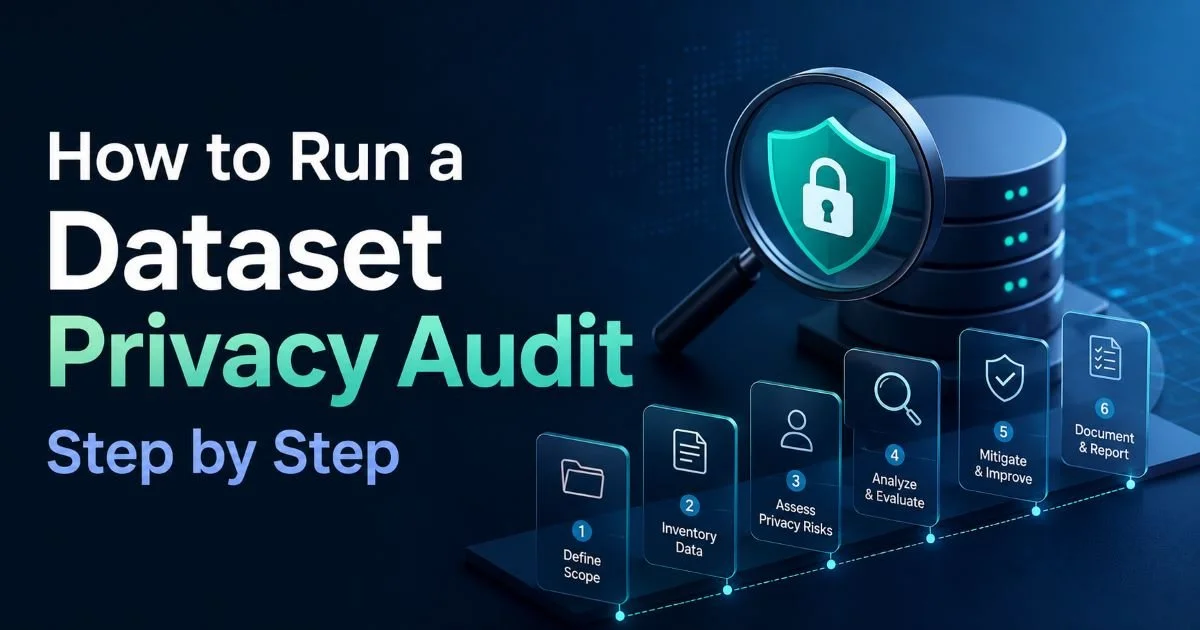
This guide walks you through every step of a privacy risk assessment, from scoping your datasets to documenting findings and building a remediation plan. If you're a data privacy or compliance professional looking for a repeatable, practical framework, this is where to start. By the end, you'll have a clear methodology you can adapt to your organization's size and regulatory environment.
Key Takeaways
- Define your audit scope before touching any data to prevent scope creep and wasted effort.
- Catalog every dataset with metadata including source, owner, retention period, and sensitivity classification.
- Map data flows to identify where sensitive information travels outside your direct control.
- Use automated scanning tools to detect personally identifiable information hiding in unstructured data.
- Document all findings in a formal report with risk scores, timelines, and assigned remediation owners.
Step 1: Define Scope and Inventory Your Datasets
Setting Audit Boundaries
Every successful privacy audit starts with a clear scope. You need to decide which business units, systems, and data types fall within the audit boundary before anyone opens a database. A common mistake is trying to audit everything at once, which leads to analysis paralysis and incomplete results. Instead, prioritize by regulatory exposure, data volume, and the sensitivity of the information stored. For example, your customer-facing CRM and marketing databases should typically come before internal HR test environments.
To understand the full picture of what a data audit involves and how it works in practice, it helps to establish a shared definition across your team before you start. Agree on terminology early. Does "dataset" mean a single database table, an entire data warehouse schema, or a collection of files in cloud storage? Alignment on definitions prevents misunderstandings that surface weeks into the process when they're expensive to fix.
Create a one-page audit charter that lists scope boundaries, excluded systems, timeline, and key stakeholders before kickoff.
Building Your Dataset Catalog
Once your scope is set, build a catalog of every dataset within it. Each entry should include the dataset name, owner, source system, creation date, last modified date, retention policy, and a preliminary sensitivity label. Spreadsheets work for small organizations, but most teams benefit from a dedicated data catalog tool. The goal at this step is completeness, not perfection. You'll refine sensitivity labels and flow details in subsequent steps.
By the end of this step, you should have a documented scope statement and a dataset inventory that accounts for structured databases, flat files, cloud storage buckets, and any third-party systems that process your data. If you find datasets nobody can identify an owner for, flag them immediately. Orphaned datasets are among the highest-risk items in any audit because nobody monitors their access controls or retention compliance.
Orphaned datasets with no clear owner are a top source of undetected privacy breaches. Never leave ownership fields blank in your catalog.
Step 2: Classify Sensitive Data and Map Data Flows
Data Classification Framework
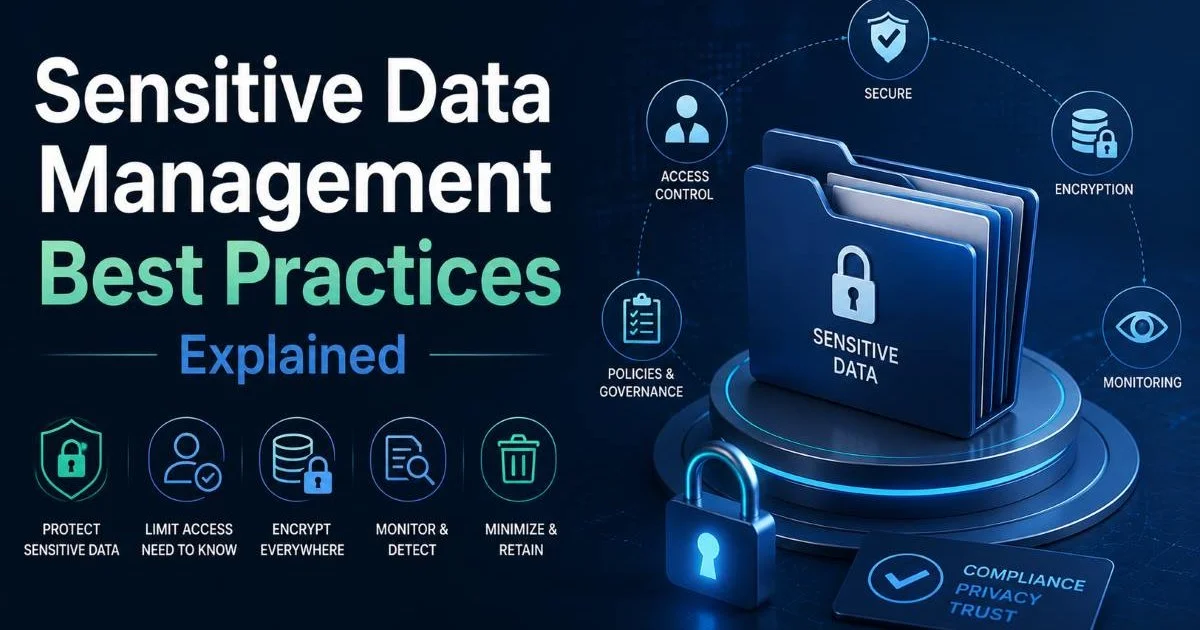
With your inventory in hand, the next step is classifying each dataset by sensitivity level. A practical framework uses four tiers: public, internal, confidential, and restricted. Restricted data includes special categories under GDPR (health records, biometric data, racial or ethnic origin), while confidential typically covers standard personally identifiable information like names, email addresses, and financial details. Applying these labels consistently requires both automated scanning and manual review, since automated tools can miss context.
Also Check: Structured Data Tips for AI Ready Websites
| Classification | Examples | GDPR Relevance | Handling Requirement |
|---|---|---|---|
| Public | Published reports, marketing materials | Low | No restrictions |
| Internal | Employee directories, meeting notes | Moderate | Access controls |
| Confidential | Customer PII, financial records | High | Encryption, access logging |
| Restricted | Health data, biometrics, criminal records | Very High | DPIA required, strict access |
When evaluating tools for automated sensitive data detection, consider how modern language models handle privacy. A recent comparison of the best LLMs for privacy highlights important differences in how AI systems process and protect personal data. This matters because many organizations now use LLM-powered tools for data discovery and classification. Choose tools that don't send your sensitive data to external servers during the scanning process.
Run automated PII scanners on unstructured data like PDFs, email archives, and chat logs, not just structured databases. That's where hidden sensitive data lives.
Mapping Data Flows
Classification alone isn't enough. You need to trace how each dataset moves through your organization and beyond. Data flow mapping reveals where sensitive information crosses system boundaries, travels to third-party processors, or gets replicated into development environments. Create diagrams showing data origins, processing stages, storage locations, and deletion points. Pay special attention to cross-border transfers, which trigger additional GDPR obligations under Chapter V.
At the end of this step, you should have every dataset labeled with a sensitivity tier and a visual map of data flows. Common mistakes here include forgetting about backup systems (which often retain data long past its primary retention period) and overlooking analytics platforms where personal data gets aggregated. If your marketing team sends customer lists to an email service provider, that's a data flow requiring documentation and a processing agreement.
"The datasets you forget about are almost always the ones that cause compliance failures."
Step 3: Assess Privacy Risks and Compliance Gaps
Conducting the Risk Assessment
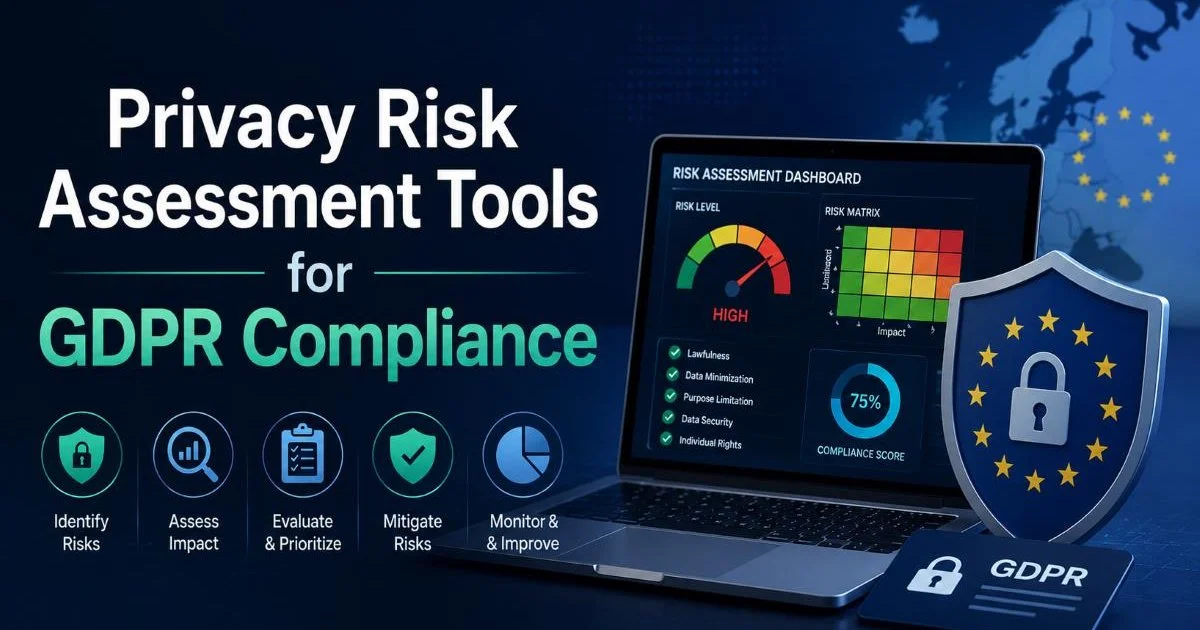
Now comes the analytical core of your privacy audit: evaluating each dataset against applicable regulatory requirements and organizational policies. For each dataset, ask a series of structured questions. Is there a lawful basis for processing? Are data subjects informed about this processing? Is the retention period justified and enforced? Are access controls proportionate to the data's sensitivity? Score each area using a consistent risk matrix that factors in both likelihood and impact of a privacy violation.
A risk assessment should produce quantifiable scores, not vague narratives. Use a scale (for example, 1 to 5 for both likelihood and impact) and multiply them to get a composite risk score. A dataset containing health records with no encryption, excessive access privileges, and no retention enforcement might score a 20 out of 25. A dataset with anonymized survey responses and proper access controls might score a 4. These numbers help you prioritize remediation efforts objectively.
Common Compliance Gaps
Certain compliance gaps appear in nearly every audit. Retention policies exist on paper but aren't enforced technically. Consent records are incomplete or can't be linked back to specific datasets. Data processing agreements with vendors are outdated or missing entirely. Privacy notices don't accurately describe how data is actually used. These aren't edge cases; they're the norm. Your audit should specifically check for each of these patterns rather than relying on general questionnaires.
Even if your organization passed a previous audit, compliance gaps can reappear quickly as new systems are deployed and data flows change. Treat each audit as a fresh assessment.
At this step's conclusion, you should have a risk register listing every dataset alongside its composite risk score, the specific gaps identified, and the regulatory articles or policies it potentially violates. This register becomes the foundation for your remediation plan. Don't skip the step of validating findings with dataset owners. They often have context about compensating controls or planned system changes that affect risk scores.
Step 4: Document Findings and Build a Remediation Plan
Structuring Your Audit Report
Your audit report needs to serve multiple audiences: executive leadership wants a summary of exposure and cost implications, technical teams need specific findings they can act on, and legal counsel needs regulatory context. Structure your report with an executive summary, methodology section, detailed findings organized by risk severity, and a remediation roadmap. Include the dataset inventory and data flow diagrams as appendices. Every finding should reference the specific dataset, the gap identified, the applicable regulation, and the recommended fix.
Avoid the temptation to soften language in the report. If a dataset containing 500,000 customer records has no encryption at rest and overly broad access permissions, say so directly. Ambiguous findings lead to ambiguous responses. Assign each finding a severity rating (critical, high, medium, low) that aligns with your risk scores. Critical findings, those with composite scores above 15 on a 25-point scale, should have remediation deadlines measured in days, not quarters.
Include screenshots or evidence snippets for critical findings. Concrete proof accelerates executive buy-in and prevents pushback from system owners.
Creating Actionable Remediation Plans
A remediation plan without owners and deadlines is just a wish list. For each finding, assign a responsible individual (not a team, a person), set a target completion date, and define what "resolved" looks like in measurable terms. For example, "implement column-level encryption on the customer SSN field in the billing database by March 15" is actionable. "Improve data security" is not. Group related findings into workstreams so teams can address multiple issues in a single change cycle.
Schedule a follow-up review 30, 60, and 90 days after the audit report is issued. Track remediation progress in the same register you used for findings. Management should receive a monthly status update showing how many critical and high findings remain open. This ongoing tracking transforms your audit from a one-time exercise into a continuous privacy management process. By the end of this step, you should have a published audit report, a remediation tracker with assigned owners and deadlines, and a review cadence documented on everyone's calendar.
Never consider the audit complete when the report is delivered. Without tracked remediation, findings become forgotten liabilities.
No image returned — MALFORMED_FUNCTION_CALL
Frequently Asked Questions
?How do I build a dataset catalog without a dedicated tool?
?Should I audit the CRM before internal HR test environments?
?How long does a full dataset privacy audit typically take?
?Is automated PII scanning enough to find all sensitive data?
Final Thoughts
A well-executed dataset privacy audit gives your organization more than compliance documentation; it provides genuine visibility into how personal data is collected, stored, shared, and protected. The four steps outlined here (scoping, classifying, assessing, and remediating) form a repeatable framework you can run quarterly or annually depending on your risk profile.
The most common failure mode isn't a bad methodology; it's a lack of follow-through on remediation. Assign owners, set deadlines, and track progress relentlessly. Your next audit should show measurable improvement, and that's the real proof your privacy management program is working.
Disclaimer: Portions of this content may have been generated using AI tools to enhance clarity and brevity. While reviewed by a human, independent verification is encouraged.