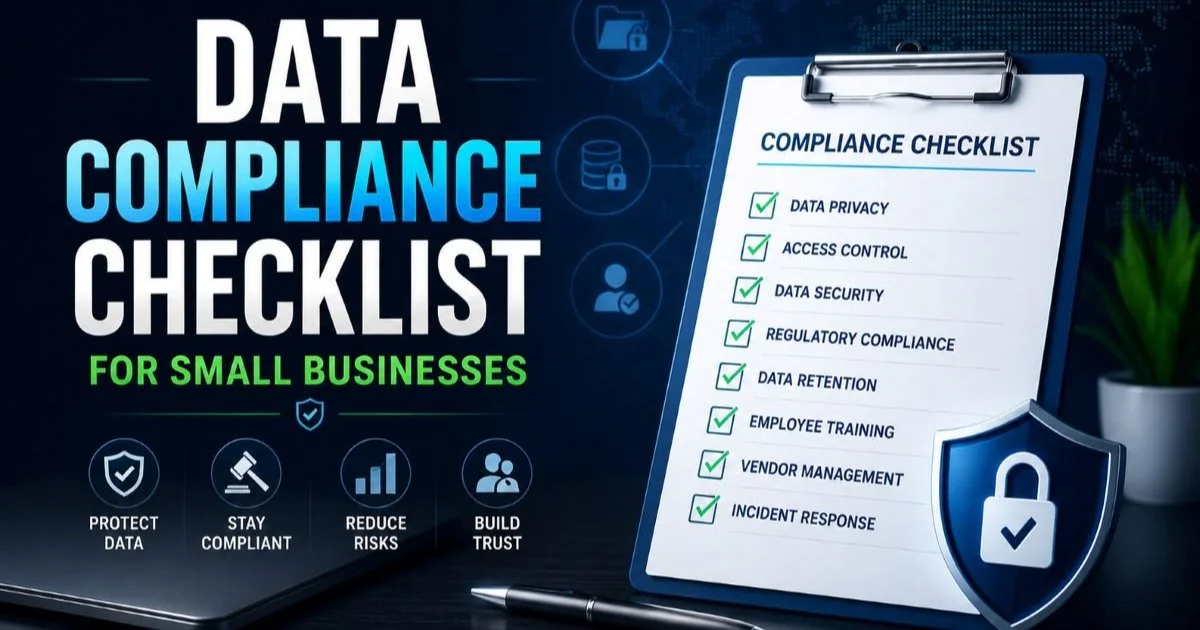
A data compliance checklist for small businesses is no longer a nice-to-have document; it's the backbone of responsible data management. Regulatory frameworks like GDPR, CCPA, and HIPAA impose steep penalties on organizations of any size that mishandle personal data, and small businesses are far from exempt. In fact, many enforcement actions target smaller firms precisely because they lack formal compliance programs. The challenge is knowing where to start.
Without dedicated legal teams or six-figure budgets, small business owners need a structured, practical approach. This guide breaks the process into four actionable steps, giving you a repeatable framework you can implement this quarter. Whether you're preparing for your first formal review or tightening an existing program, the steps below will help you identify gaps, mitigate risk, and build a culture of accountability around the data you collect and store.
Key Takeaways
- Map every data source before attempting any compliance assessment or remediation work.
- Classify data by sensitivity level to prioritize protection of high-risk records first.
- Conduct regular audits to catch policy drift, duplicate records, and outdated consent.
- Document your compliance processes so they survive staff turnover and regulatory scrutiny.
- Use automated tools to reduce manual effort and minimize human error in ongoing monitoring.
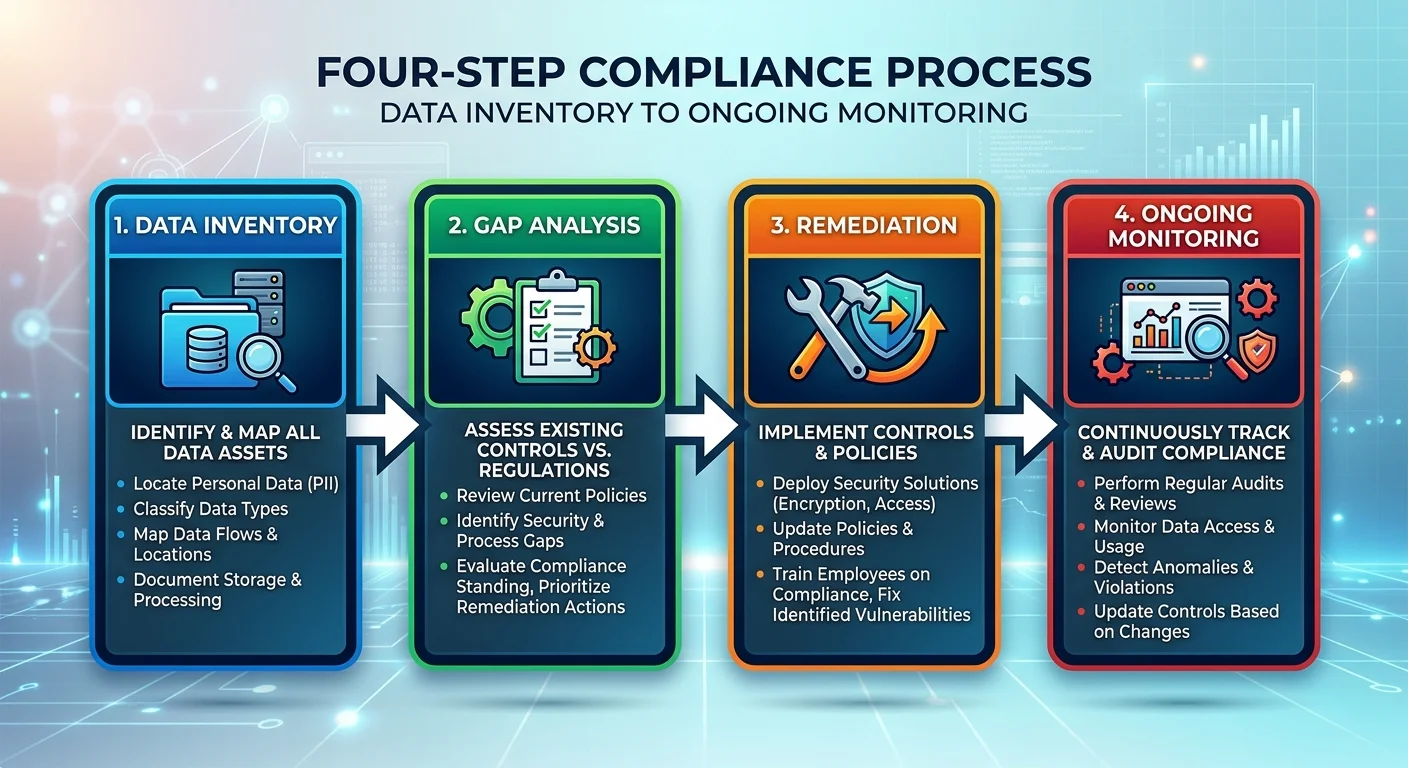
Step 1: Inventory and Map Your Data
Identify All Collection Points
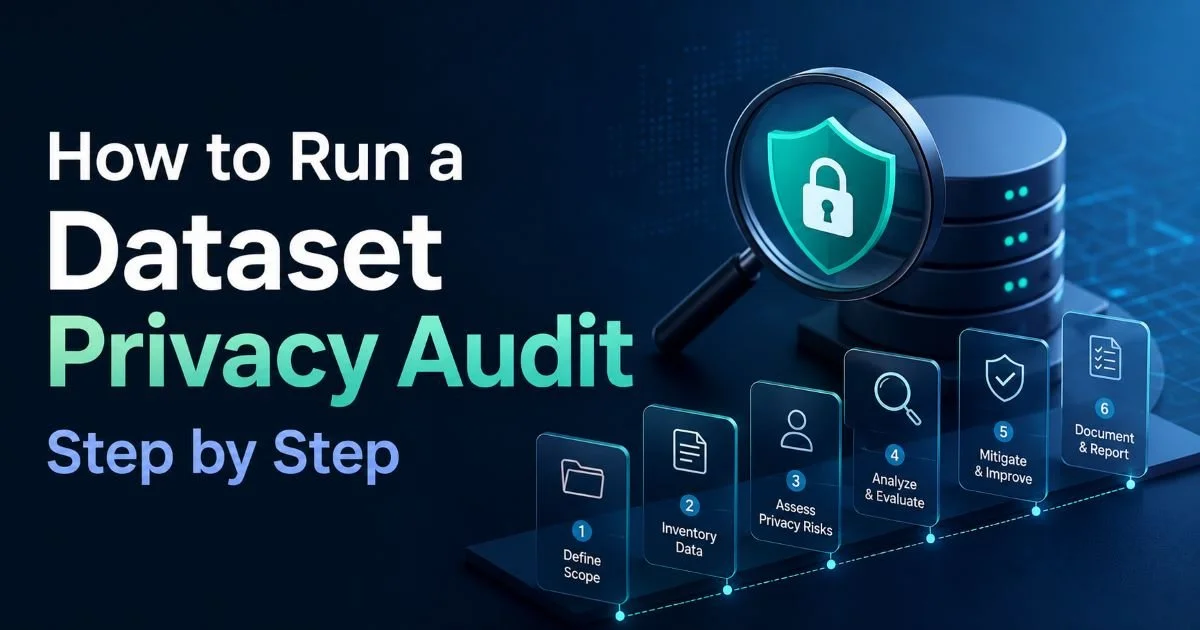
The first step in any data compliance checklist for small businesses is understanding exactly what data you hold and where it originates. Start by listing every system, application, and third-party service that collects personal information. This includes your CRM, email marketing platform, payment processor, website contact forms, and even paper-based records. Many businesses discover shadow data sources during this exercise, such as spreadsheets shared on personal drives or customer lists stored in outdated tools. If you're unfamiliar with the full scope of a data audit and how it works, that's a strong starting point for understanding why this inventory matters.
Document Data Flows
Once you've identified collection points, trace how data moves through your organization. Map the journey from initial capture through storage, processing, sharing with third parties, and eventual deletion. A visual data flow diagram makes it far easier to spot unnecessary transfers or retention that violates minimization principles. For a five-person marketing agency, this might reveal that client PII passes through four SaaS tools before reaching the project manager's inbox.
Use a simple spreadsheet with columns for data type, source system, storage location, retention period, and legal basis to build your initial inventory.
Pay special attention to cross-border transfers. If you use cloud services with servers in multiple jurisdictions, you may be subject to regulations you haven't considered. The EU's GDPR, for example, imposes specific requirements on transfers outside the European Economic Area. Document which vendors have Data Processing Agreements in place and verify their compliance certifications. This mapping exercise typically takes two to five days for a business with fewer than 50 employees, depending on the complexity of your tech stack.
Step 2: Classify and Prioritize Sensitive Data
Establish Sensitivity Tiers
Not all data carries the same risk. Financial records, health information, and government-issued identifiers demand stronger protections than a newsletter subscriber's first name. Create a tiered classification system that assigns each data type a sensitivity level. A three-tier model (public, internal, restricted) works well for most small businesses without overcomplicating the process. Restricted data should include anything that, if exposed, would trigger breach notification requirements or cause direct harm to individuals. For deeper guidance on handling high-risk information, review these sensitive data management best practices.
| Tier | Data Examples | Access Level | Encryption Required | Retention Review |
|---|---|---|---|---|
| Public | Blog content, marketing copy | All staff | No | Annual |
| Internal | Employee directories, vendor contracts | Role-based | In transit | Semi-annual |
| Restricted | SSNs, payment card data, health records | Named individuals only | At rest and in transit | Quarterly |
Apply Access Controls
Classification is meaningless without corresponding access controls. Implement the principle of least privilege: every employee should have access only to the data required for their specific job function. A bookkeeper needs financial records but has no reason to view customer health questionnaires. Use role-based access controls (RBAC) in your SaaS tools and file-sharing platforms to enforce these boundaries programmatically, rather than relying on informal agreements or trust alone.
Shared login credentials are one of the most common compliance failures in small business audits. Every user should have a unique account with appropriate permissions.
Review access permissions at least quarterly, and immediately revoke access when an employee changes roles or leaves the company. A surprising number of data breaches stem from former employees who retain system access weeks or months after departure. Offboarding checklists should include explicit steps for deprovisioning accounts across all platforms. This is also a good time to audit inactive accounts and service credentials that may have been set up for one-time integrations and then forgotten.
Step 3: Conduct a Compliance Gap Analysis
Review Regulatory Requirements
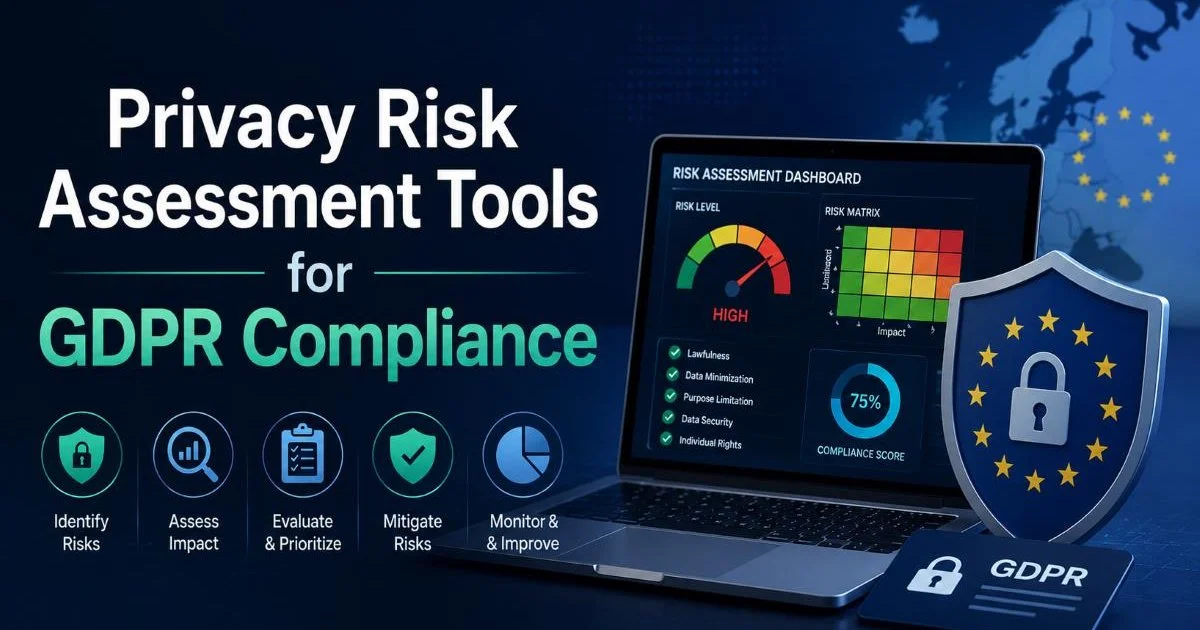
Your data compliance checklist for small businesses must be anchored to the specific regulations that apply to your operations. A medical practice in California faces both HIPAA and CCPA obligations, while an e-commerce retailer selling to EU customers must comply with GDPR regardless of where the business is physically located. List every regulation that governs your data handling, then map each requirement to your current practices. When evaluating GDPR-specific obligations, understanding the privacy risk assessment tools available for GDPR compliance can save significant time and reduce the chance of missing critical requirements.
Assess Current Controls
With your regulatory map in hand, compare what's required against what you actually do. This gap analysis is where most small businesses uncover their biggest vulnerabilities. Common gaps include missing or outdated privacy policies, lack of documented consent mechanisms, no formal breach response plan, and inadequate data retention schedules. Score each gap by likelihood and potential impact to create a prioritized remediation roadmap. The most serious gaps, those that could result in regulatory fines or data breaches, should be addressed within 30 days.
Also Read: Website Security Scanning for Small Business Owners
"The most expensive compliance failure isn't a fine; it's the customer trust you lose and never recover."
Avoid the common mistakes that derail compliance efforts. For instance, many businesses treat their privacy policy as a set-and-forget document, when in reality it needs updating every time data practices change. Others assume that vendor compliance covers their own obligations, which is almost never the case. A thorough review of common GDPR compliance audit mistakes will help you steer clear of these pitfalls. Be honest during your gap analysis; the goal isn't to check boxes but to build a genuinely protective program.
After scoring each gap, assign an owner and a deadline. Compliance work stalls when responsibilities are vague. Even in a small team, one person should be accountable for each remediation task. If you lack internal expertise for a particular issue (such as configuring encryption for data at rest), consider engaging a specialist for that specific task rather than trying to hire a full-time compliance officer. Many consultancies now offer fractional privacy officer services tailored to small business budgets.
Gap analyses should be repeated at least annually, or whenever you adopt a new technology platform, enter a new market, or experience a significant organizational change.
Step 4: Implement Ongoing Monitoring and Documentation
Automate Where Possible
A data compliance checklist for small businesses only delivers lasting value when it's supported by ongoing monitoring. Manual reviews are important, but automation dramatically reduces the risk of human error and policy drift. Tools that continuously scan for duplicate records, expired consent, and unauthorized data access give you real-time visibility into your compliance posture. Adopting strong AI governance best practices is especially relevant if you use machine learning models or AI-powered analytics that process personal data. Automation doesn't replace human judgment, but it amplifies it.
Start with the highest-impact automations. Set up alerts for unusual data access patterns, automate retention policy enforcement so records are deleted on schedule, and use data discovery tools to flag sensitive information that's been stored in unapproved locations. Many of these capabilities are available in affordable SaaS platforms designed for small and mid-sized organizations. Even basic automations, like scheduled permission reviews and consent expiration notifications, can meaningfully reduce your risk profile without requiring a dedicated IT team.
Schedule a 30-minute monthly "compliance pulse check" where you review automated alerts, address flagged issues, and update your checklist with any new data sources or regulatory changes.
Maintain Audit-Ready Documentation
Documentation is the evidence that proves your compliance program exists and functions. Regulators don't accept verbal assurances. Maintain written records of your data inventory, classification decisions, access control policies, consent logs, breach response procedures, and training records. Store these documents in a centralized, version-controlled repository. When a regulator or auditor asks to see your records, you should be able to produce them within hours, not weeks. The data compliance checklist for small businesses you build today should itself be a living document that evolves with your organization.
Train every employee who handles personal data, not just management. Annual training is the minimum; quarterly refreshers are better. Document attendance and quiz scores as evidence of your training program. Even a 20-minute session covering data handling basics, phishing awareness, and incident reporting procedures can significantly reduce the likelihood of accidental breaches. Build compliance into onboarding so new hires understand their responsibilities from day one, and update training materials whenever your policies or technology stack changes.
Finally, test your breach response plan at least once a year through a tabletop exercise. Walk your team through a realistic scenario, such as a stolen laptop containing unencrypted customer records, and evaluate whether your procedures hold up under pressure. Document the results, note any weaknesses, and update the plan accordingly. These exercises build muscle memory and surface procedural gaps that look fine on paper but fail in practice. A tested plan inspires confidence; an untested one is just a hope.
Frequently Asked Questions
?How long does the data inventory and mapping step actually take?
?Do small businesses really get penalized under GDPR and CCPA?
?What's the cheapest way to build a data inventory without compliance software?
?What counts as a shadow data source that I might be missing?
Final Thoughts
Building a data compliance program doesn't require a massive budget or a full legal department. It requires discipline, clarity, and a willingness to treat data protection as an ongoing responsibility rather than a one-time project. The four steps outlined here, inventory, classification, gap analysis, and monitoring, give you a framework that scales with your business.
Start with what you have, address the highest risks first, and improve incrementally. The businesses that thrive under regulatory scrutiny are the ones that built their compliance habits early and kept refining them.
Disclaimer: Portions of this content may have been generated using AI tools to enhance clarity and brevity. While reviewed by a human, independent verification is encouraged.